
Central Pennsylvania Homeowners Discover Structural and Aesthetic Value in Hardscaping
Bainbridge, United States – March 18, 2026 / Logan’s Landscaping /
Spring is a natural point for homeowners across central Pennsylvania to reassess their outdoor spaces. Sloped terrain, recurring erosion, and underdeveloped yard sections are among the most common challenges property owners face in the region. For many, these issues go unaddressed year after year because the path to a practical and visually appealing solution isn’t immediately obvious. Retaining walls have long served as a foundational element in residential landscaping, offering both structural stability and significant design potential. A new resource from Logan’s Landscaping provides a detailed guide to how retaining walls shape and elevate outdoor spaces, covering creative applications, material choices, and the value these structures bring to residential properties.
Why Unmanaged Slopes Cost Homeowners More Than They Realize
Across communities like Elizabethtown, Mechanicsburg, Hershey, Hummelstown, and Bainbridge, residential lots frequently feature natural elevation changes. While moderate grade variation can add character to a property, unmanaged slopes introduce a range of practical problems that tend to worsen over time. Heavy spring rain events accelerate soil erosion, stripping mulch from planting beds, exposing root systems, and directing water runoff toward home foundations. In low-lying areas, redirected water creates persistently wet zones that limit how a yard can be used.
These concerns are not limited to steeply graded properties. Even gradual slopes can create uneven lawn areas that are difficult to maintain and present challenges for planting and outdoor living. Over time, soil displacement changes the character of a yard in ways that become harder and more costly to address.
Beyond the structural dimension, many homeowners find that sloped or terraced portions of their property feel disconnected from the rest of the landscape. Without a defined structure to anchor those spaces, they tend to remain underdeveloped. Retaining walls address this by giving those areas form and function. They create defined edges, level planting areas, and transitions between zones that allow a yard to feel cohesive rather than fragmented.
How Retaining Walls Connect to Broader Outdoor Design
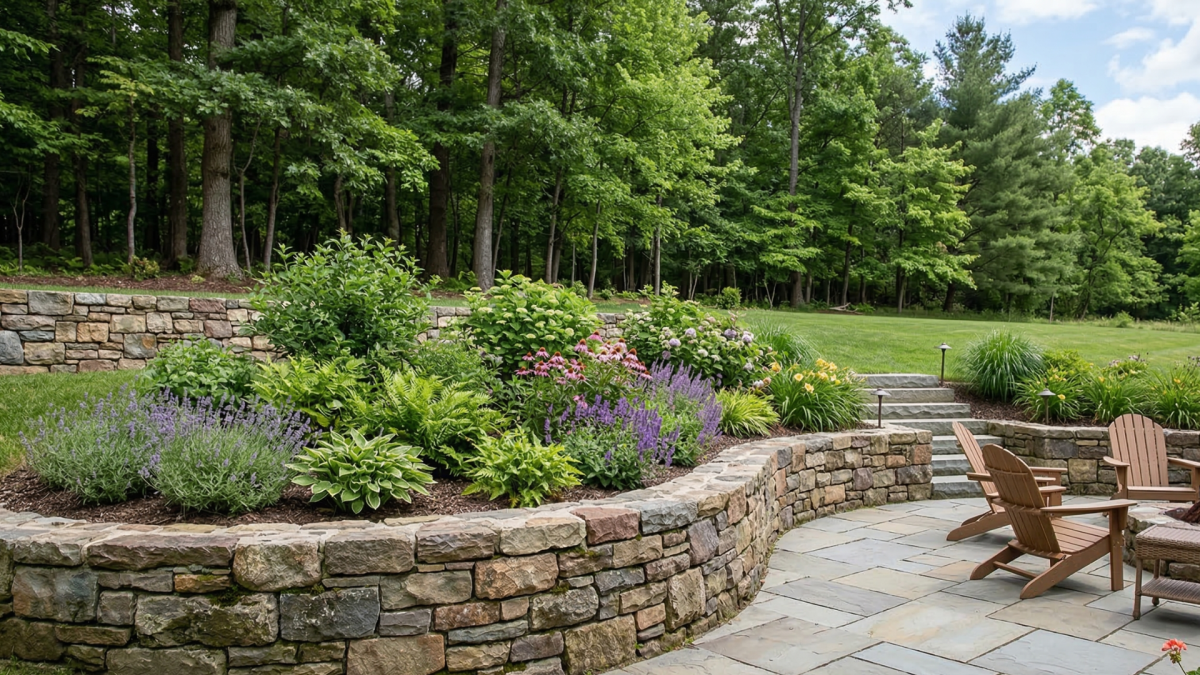
Logan’s Landscaping integrates retaining walls into a broader outdoor design and build process rather than treating them as standalone structures. When a wall is designed in context with the surrounding space, it can serve multiple functions simultaneously. A tiered wall system along a rear slope might retain soil, create planting shelves for softscapes, and provide a defined boundary for a patio. A low wall flanking a front entry can frame the approach while holding a raised planting bed in place.
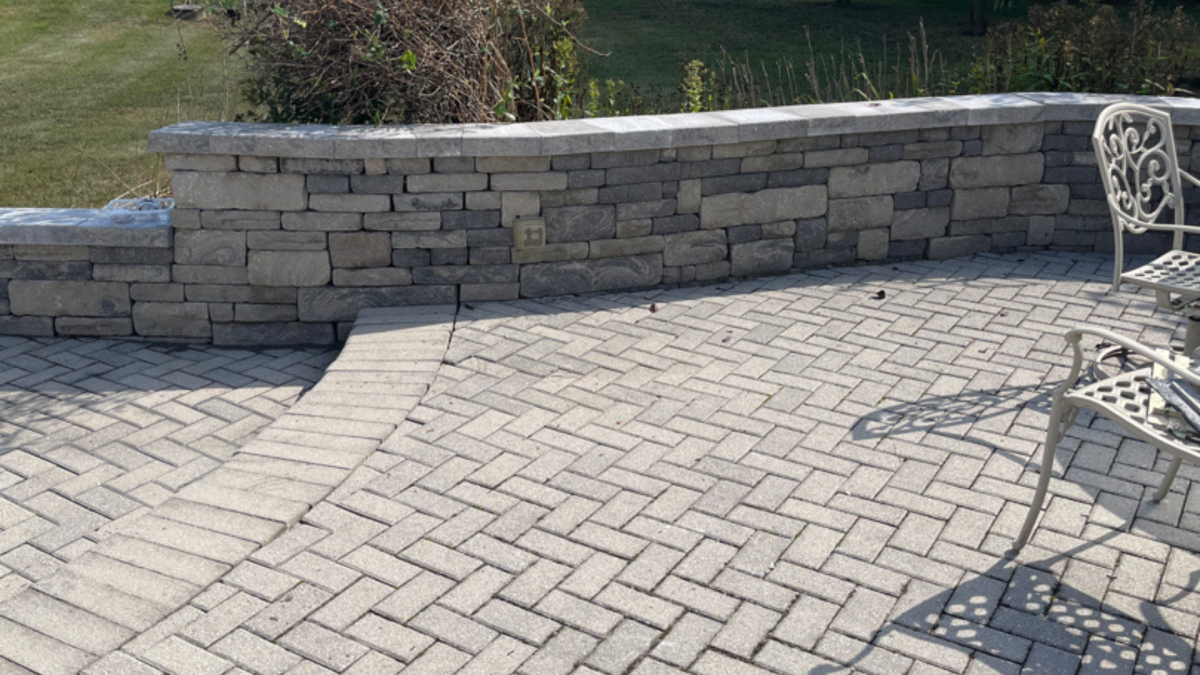
The company’s outdoor living services, including patios, paver walkways, pergolas, outdoor kitchens, and fireplaces and fire pits, are frequently incorporated into projects that begin with a retaining wall as the structural anchor. The relationship between hardscaping elements is central to how Logan’s Landscaping approaches design. A wall that terminates awkwardly, or that doesn’t account for adjacent walkways and planting areas, misses the opportunity to contribute to the property’s overall composition.
Design renderings are prepared before installation begins, allowing homeowners to review layout options, material selections, and the relationship between the wall and surrounding features. This step is particularly valuable in projects where retaining walls connect to multiple other elements. Plantings and softscapes are coordinated during this phase, ensuring that wall height, drainage layer placement, and soil depth support the intended plant selections.
A Design-First Approach to Structural Hardscaping
Logan’s Landscaping approaches retaining wall projects with the same design attention applied to patios, lighting plans, and garden installations. The goal is to develop a wall that meets the structural requirements of the site while contributing meaningfully to the property’s aesthetic. Material selection, wall profile, and the wall’s relationship to existing features are all considered during the planning phase.
The team’s familiarity with Pennsylvania’s seasonal conditions, including frost depth, drainage behavior, and soil composition across the region, informs both material recommendations and construction methods. Concrete segmental block and natural stone are the most commonly specified materials in this region, and both are evaluated against specific site conditions and the homeowner’s design preferences.
Detailed design renderings give clients a realistic view of the finished result before work begins, supporting better decision-making across all phases of a project. Homeowners can review and refine the proposed layout in the context of their full yard, not just a single section of it. Additional information about the company’s approach to outdoor projects is available through the Logan’s Landscaping outdoor services and portfolio.
Planning Considerations for Central Pennsylvania Properties
Properties across the central Pennsylvania region share landscape characteristics that directly influence how retaining walls should be designed and built. Soil composition in many areas includes clay-heavy profiles that affect drainage and frost behavior. Temperature fluctuations between seasons create freeze-thaw cycles that place stress on wall materials and footing systems, making site evaluation an important first step in any project.
Homeowners planning projects in communities from Bainbridge and Mount Joy to Harrisburg and Mechanicsburg benefit from working with a team that understands local conditions. Wall footing depth, drainage layer specifications, and material choices all vary based on site-specific factors rather than general standards. Information about retaining wall design and installation is available for homeowners across the region who are evaluating their options for the coming season.
A Local Presence Built Through Consistent Communication
Logan’s Landscaping has established a presence across central Pennsylvania through a process built on communication, clear project expectations, and follow-through at each stage of work. The company’s service area spans communities from Elizabethtown and Hummelstown to Hershey and Mechanicsburg, and the team brings working knowledge of the landscape conditions found throughout the region.
The company’s approach to client relationships is grounded in transparency. Homeowners know what to expect at each stage of a project, from initial site evaluation and design development through material procurement and installation. Logan’s Landscaping in central Pennsylvania maintains this standard across all project types, whether the scope involves a single retaining wall or a full outdoor living installation.
Retaining Walls as a Starting Point for Outdoor Transformation
Retaining walls represent one of the more versatile investments a homeowner can make in a residential landscape. They resolve structural concerns while creating opportunities for tiered gardens, defined outdoor spaces, integrated plantings, and connections to other hardscaping elements. For homeowners in central Pennsylvania considering landscape projects this spring, beginning the planning process early allows time for thorough site evaluation, material selection, and design development before installation begins.
Logan’s Landscaping is available to discuss site conditions and project possibilities with homeowners throughout the region. Inquiries can be directed to the team at 717-210-5506.

Contact Information:
Logan’s Landscaping
129 Meadow View Ln
Bainbridge, PA 17502
United States
Contact Logan’s Landscaping
(717) 210-5506
https://gologans.com/

Original Source: https://gologans.com/media-room/#/media-room
